Table of contents
Sanctions are often framed as clean instruments of pressure, calibrated to change behavior without firing a shot, yet on the ground they can feel like an invisible wall that steadily narrows daily choices, from banking to travel, from insurance to schooling, and from the cost of bread to the cost of hope. Over the past decade, the expansion of financial restrictions, export controls, and secondary sanctions has pushed ordinary people into a parallel economy of workarounds, delays, and quiet exclusions. The headline numbers are debated, but the lived effects are not.
When payments fail, life shrinks fast
How do you buy normality? In sanctioned environments, the first shock is often not at the border or in the supermarket, but on a screen: a card declined, a transfer “pending” for days, an online subscription suddenly unavailable, and a small business learning that a routine invoice now triggers extra compliance checks. The mechanics are technical, yet the consequences are intimate, because modern life runs on correspondent banking, card networks, and cloud-based services that can switch off with little warning.
The economic literature has long documented that broad sanctions correlate with higher transaction costs and weaker growth, but the day-to-day reality is best understood through friction, and friction compounds. Importers face longer routes and higher premiums, firms must prepay for goods instead of using credit, and households absorb volatility as currency values swing. Even where humanitarian exemptions exist on paper, banks and logistics companies often “de-risk” by refusing anything that looks complicated, and the burden lands on patients, students, and entrepreneurs who cannot afford delays. In practice, compliance departments set the tempo of daily life.
Data points show how quickly the burden can spread. The IMF has repeatedly noted that sanctions episodes tend to coincide with trade contraction, investment pullback, and inflationary pressure, and research from academic economists has linked financial sanctions in particular to sharp drops in cross-border payment flows. Meanwhile, the World Bank’s work on inflation dynamics in import-dependent economies underscores a simple chain: when access to foreign currency tightens and shipping costs rise, prices climb, and households spend a larger share on essentials. People do not need to read the spreadsheets to feel it; they feel it at the pharmacy counter and in the rent negotiation.
Then there is the informalization effect: sanctioned economies frequently see more cash usage, more intermediaries, and more reliance on personal networks. That can keep trade alive, but it also increases exposure to fraud, raises the cost of trust, and leaves workers with fewer protections. The invisible wall is not just the inability to pay; it is the sense that every transaction has a shadow, and that ordinary life requires unofficial solutions, which in turn reinforces inequality between those who can navigate the maze and those who cannot.
Travel becomes paperwork, not freedom
Who gets to leave, and at what price? Sanctions do not always prohibit travel outright, but they can turn a simple trip into an obstacle course of visas, routing, insurance exclusions, and abrupt cancellations. Airlines may reduce routes because leasing, maintenance, or insurance becomes complicated, and travelers are pushed into longer itineraries, higher fares, and transit points that add risk, especially for families and the elderly.
The aviation sector offers a window into the broader pattern. Restrictions that touch aircraft parts, maintenance services, or financing can degrade connectivity over time, and connectivity is more than convenience: it shapes access to education, healthcare, and business ties. Add financial restrictions, and even booking a ticket can become uncertain if payment processors flag transactions. Students abroad may struggle to receive money, and parents may discover that ordinary remittances now take detours through intermediaries, each adding fees and uncertainty.
Beyond flights, mobility is also legal and bureaucratic. Sanctions can complicate consular services, limit access to international documentation channels, and raise scrutiny at borders, because compliance regimes encourage risk-avoidance. People learn to carry more paperwork, explain more, and wait more. For some, the pressure is psychological: a persistent fear that a last-minute rule change could strand them, or that an ordinary administrative step could trigger suspicion.
This is where the global patchwork of treaties, compliance rules, and jurisdictional reach becomes part of everyday conversation. Discussions about safe transit, legal exposure, or where a dispute might be enforced are no longer confined to specialists. Some travelers research, sometimes obsessively, how different jurisdictions cooperate on cross-border legal matters, including questions tied to countries with no extradition treaty with Israel, not because they are fleeing justice, but because sanctions-era uncertainty can make people unusually aware of how quickly a situation can escalate across borders. The invisible wall, here, is the quiet sense that movement is conditional.
The hidden inflation: medicines, parts, time
Inflation is not only a number. In sanctioned settings, it often arrives as a scavenger hunt: the medicine exists, but not this month; the car part is available, but only via a reseller; the diagnostic machine works, but the maintenance contract is frozen. Even when sanctions include humanitarian carve-outs, supply chains rarely respect neat categories, because production depends on financing, shipping, insurance, and a web of components that may be restricted or simply too risky to handle.
Health systems are particularly exposed to these indirect effects. International agencies have repeatedly warned that restrictions on banking and logistics can obstruct procurement of medical goods, and that over-compliance by private actors can exacerbate shortages. The World Health Organization and humanitarian organizations have described how delays in importing specialized drugs, laboratory reagents, or medical equipment parts can translate into postponed treatment and higher mortality risks, especially for chronic diseases. The cruelty is often banal: a missing filter, a delayed payment confirmation, a shipment stuck in compliance review.
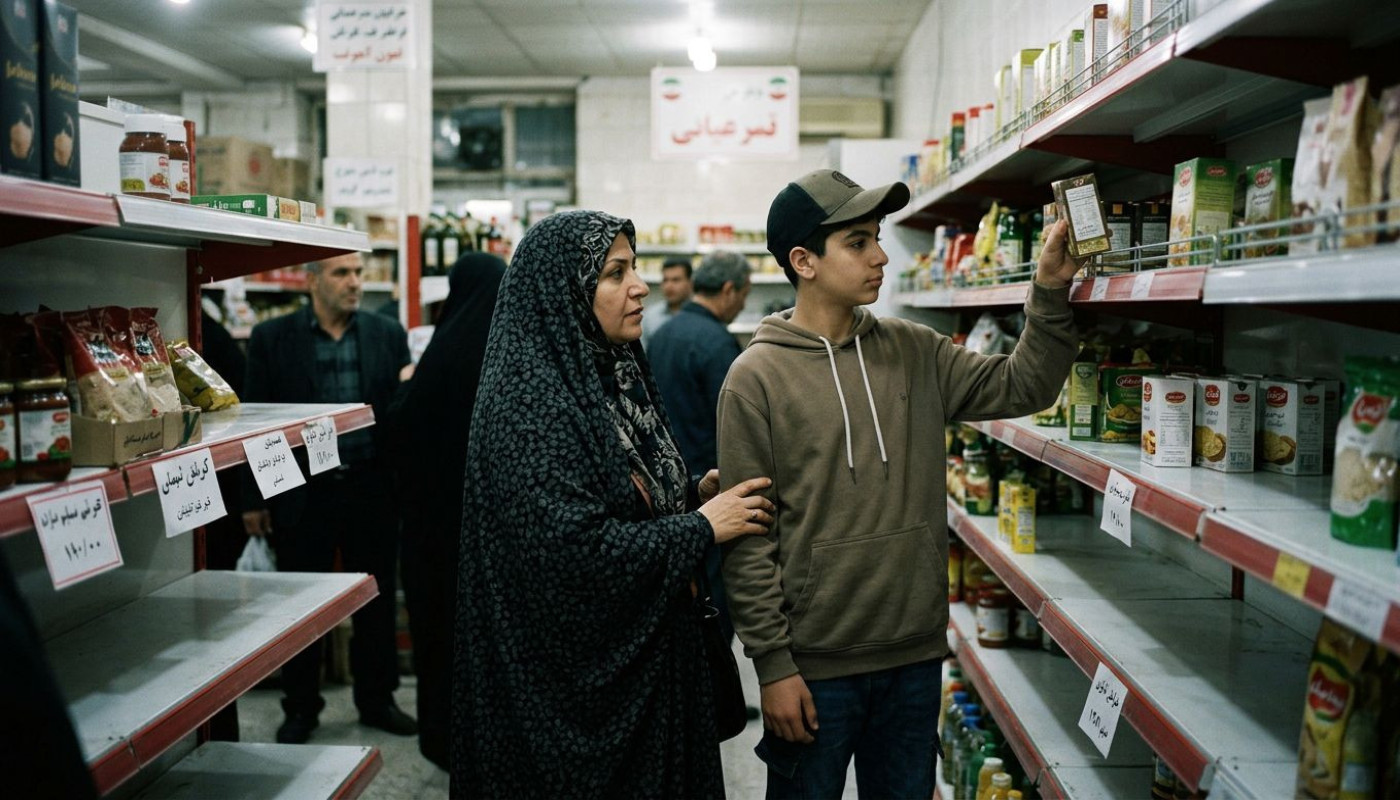
Households feel a second layer of inflation in services and time. When official channels become unreliable, people spend hours searching for scarce items, negotiating with multiple sellers, or traveling farther to find essentials. Time becomes a currency, and it is disproportionately extracted from women, caregivers, and low-income workers who have the least flexibility. Economists sometimes treat these as “non-monetary costs,” yet they shape daily life as sharply as price tags do, because they erode productivity, rest, and family stability.
There is also the quality downgrade that rarely shows up in statistics. Substitute goods enter the market, sometimes legitimate, sometimes counterfeit, and consumers cannot easily verify safety. Mechanics improvise repairs, hospitals ration supplies, and schools reuse outdated materials. Over time, a sanctioned society can become an economy of makes-do. The invisible wall is not a single shortage; it is the steady erosion of reliability, the sense that planning ahead is risky, and that the future is negotiated week by week.
Workarounds breed inequality and quiet fear
Sanctions create survivors, and they create bystanders. When access to international markets is constrained, those with connections, foreign currency, or the ability to travel often find routes around obstacles, while those without such assets face higher prices, fewer opportunities, and greater vulnerability to exploitation. This is one of the most consistent findings in sanctions research: broad-based restrictions can strengthen informal power brokers and widen gaps, even when the stated aim is to pressure decision-makers.
The labor market shifts in telling ways. Formal employers may struggle to import inputs or receive payments, and as activity moves into cash-heavy sectors, workers lose contracts, benefits, and legal protections. Young professionals find their credentials harder to monetize internationally, because platforms, payment tools, and corporate hiring pipelines may be inaccessible. Freelancers who once worked for overseas clients can be locked out by compliance filters, and a career can stall not for lack of skill, but for lack of a working payment corridor.
Under these pressures, families adopt coping strategies that can alter social fabric: delaying marriage, reducing births, pulling children from private schools, or relying on extended family transfers. Remittances become lifelines, yet they can be disrupted by banking constraints or inflated by intermediary fees. Where currencies depreciate, savings evaporate, and households shift into durable goods or foreign currency when possible, reinforcing a two-tier society between those who can hedge and those who cannot.
The psychological climate is harder to measure, but no less real. Uncertainty fosters self-censorship in commerce, caution in communication, and reluctance to engage with anything that might trigger scrutiny. Small businesses may avoid expansion because compliance risk feels unknowable. Even apolitical activities, like opening an online store or registering for an international exam, can become stressful if the outcome depends on distant rules. The invisible wall, finally, is the normalization of constraint, the quiet recalibration of ambition to what seems safely doable.
Planning a way through: budgets, routes, safeguards
For households and businesses, the practical response starts with planning: build wider cash buffers, price in delays, and verify alternatives before emergencies hit. Travelers should reserve refundable options where possible, confirm payment methods in advance, and budget for indirect routes and insurance exclusions. Where assistance exists, from humanitarian channels to local relief programs, apply early, keep documents ready, and treat time as a cost worth funding.
On the same subject

From Passports To Property: Overlooked Links Between Fiscal Policy And Residency Choices

The Unseen Role Of Compliance Officers In Cross-border E-commerce

Do Tiered Pricing Models Offer Genuine Student Choice?

How To Optimize Your Professional Profile For Better Career Opportunities
